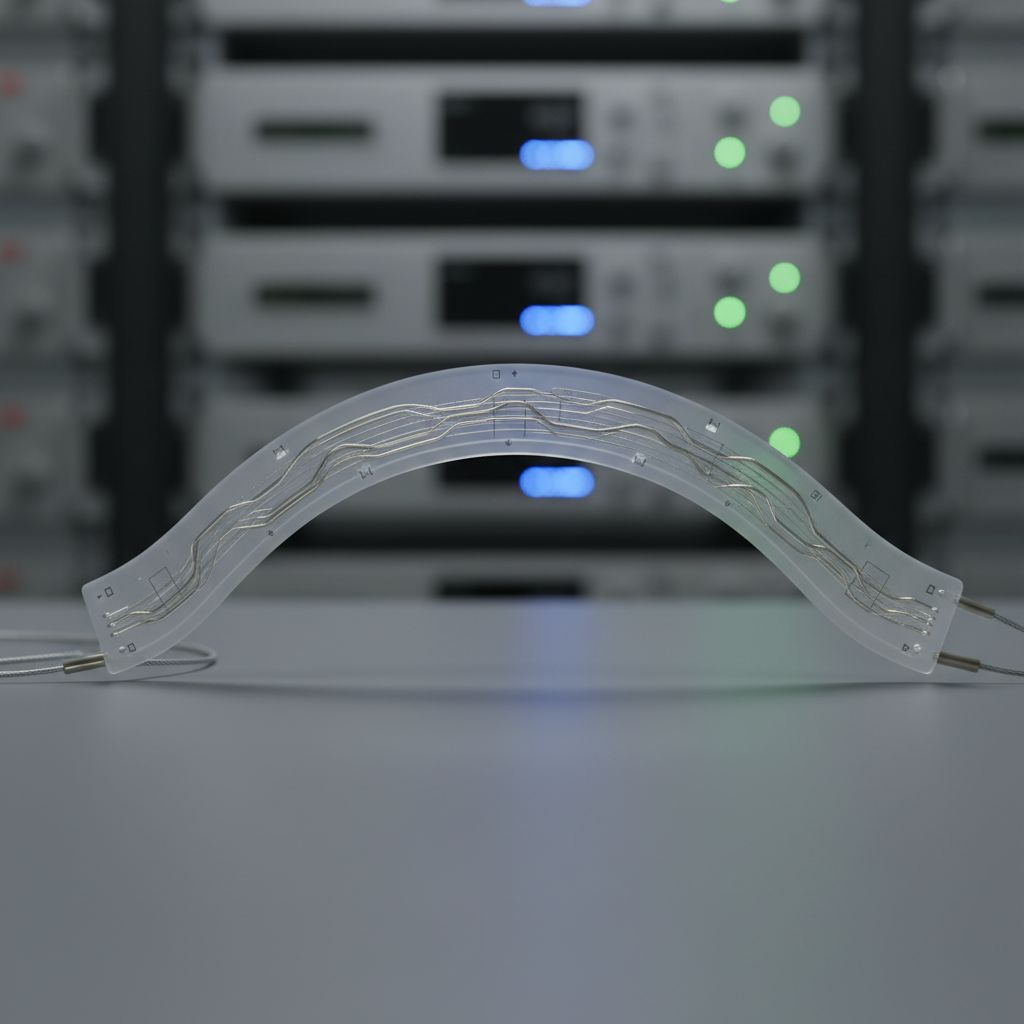
A flexible soft sensor made of translucent silicone embedded with fine, serpentine metallic traces, gently arched across a smooth graphite-gray platform. The sensor’s surface shows subtle texture and tiny alignment markers, with its thin connecting wires leading toward a blurred instrumentation rack in the background. Neutral, even studio lighting from both sides highlights the curvature and material softness, casting soft-edged shadows that emphasize form without distraction. Photographic realism, captured from a low, close-up macro perspective to showcase micro-scale detail with a very shallow depth of field, leaving the background pleasantly defocused. The mood is quietly futuristic and precise, evoking advanced soft robotics and wearable technology applications in a clean, modern research context.

Labs and Centers

This page highlights the biosensors research portfolio at Andrews University, detailing projects in intelligent sensing, digital twins, and ML-driven device optimization.

Biosensors and AI
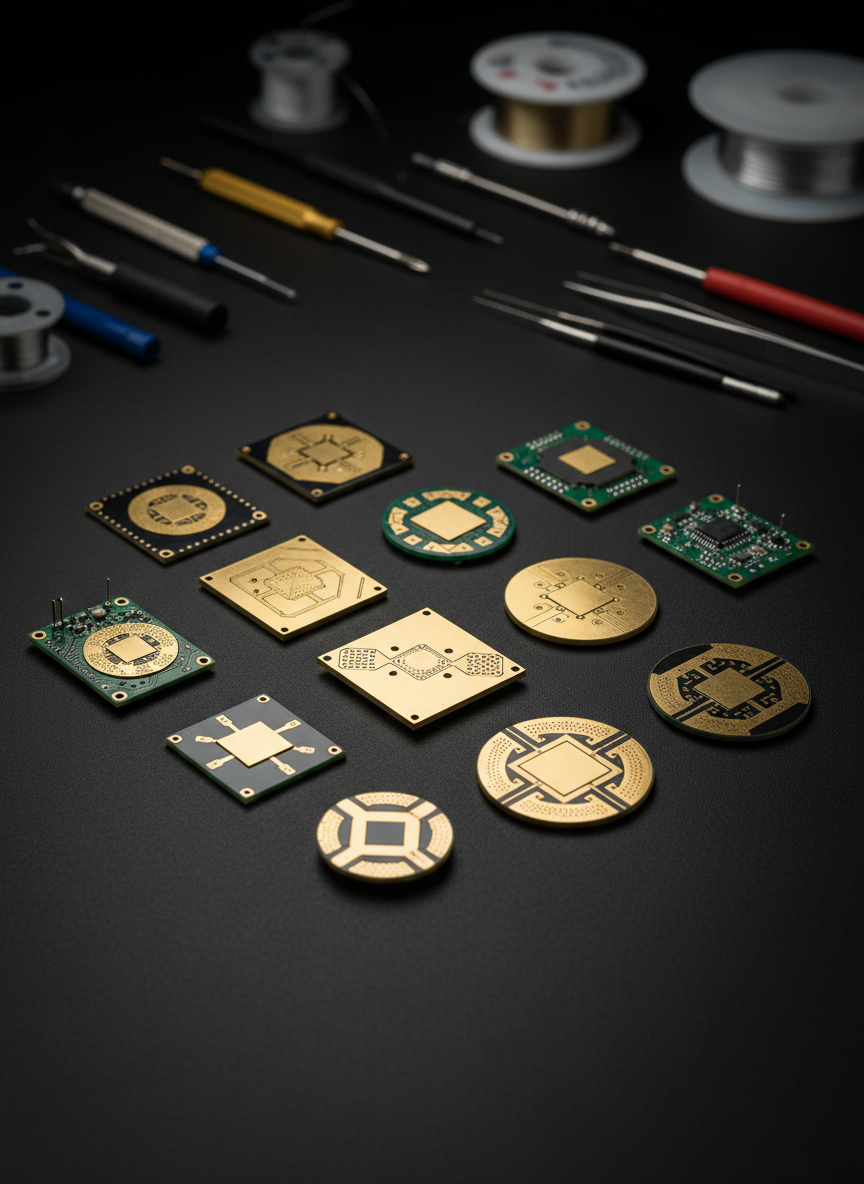
An array of different biosensor chips arranged with intentional order on a matte black surface, each device showcasing unique geometries, gold-plated electrodes, and intricate micro-patterns. Some chips are mounted on small printed circuit boards, while others rest directly on the surface, framed by scattered, softly blurred engineering tools in the background. Overhead soft studio lighting produces clean, controlled reflections on the metallic traces and crisp definition of edges. Photographic realism with a slightly elevated angle and rule-of-thirds composition, creating strong contrast between the sensors and the dark backdrop. The mood is methodical and innovative, highlighting diversity in sensor design and suggesting an active research portfolio in mechanical and chemical engineering.

We pursue integrated biosensor platforms, soft sensors, and digital twins, leveraging machine learning to translate signals into actionable biomedical insights.
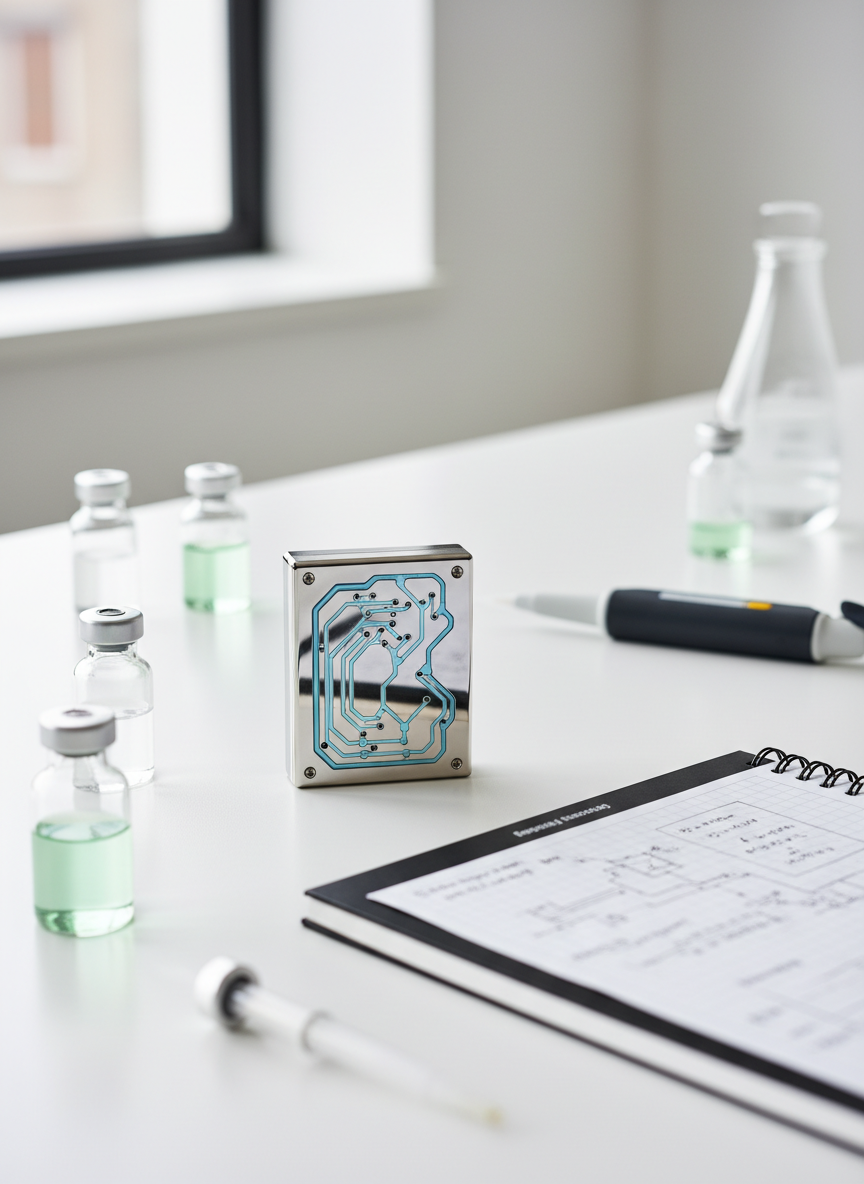
A sleek stainless-steel biosensor prototype resting on a spotless white laboratory benchtop, its microfluidic channels etched in delicate, precise patterns filled with a faintly tinted solution. Around it lie neatly arranged glass vials, a calibrated pipette, and a slim engineering notebook open to a schematic diagram, all slightly out of focus. Cool, diffused daylight from a large lab window reflects softly off the metal surfaces, creating crisp highlights and gentle shadows. Photographic realism, shot at eye level with a shallow depth of field, emphasizes the sensor as the focal point. The atmosphere is professional, precise, and research-driven, conveying cutting-edge engineering in a calm, orderly environment suitable for a university professor’s homepage hero image.

Our labs explore interdisciplinary hardware, data science, and instrumentation to advance real-time monitoring and personalized diagnostics.